
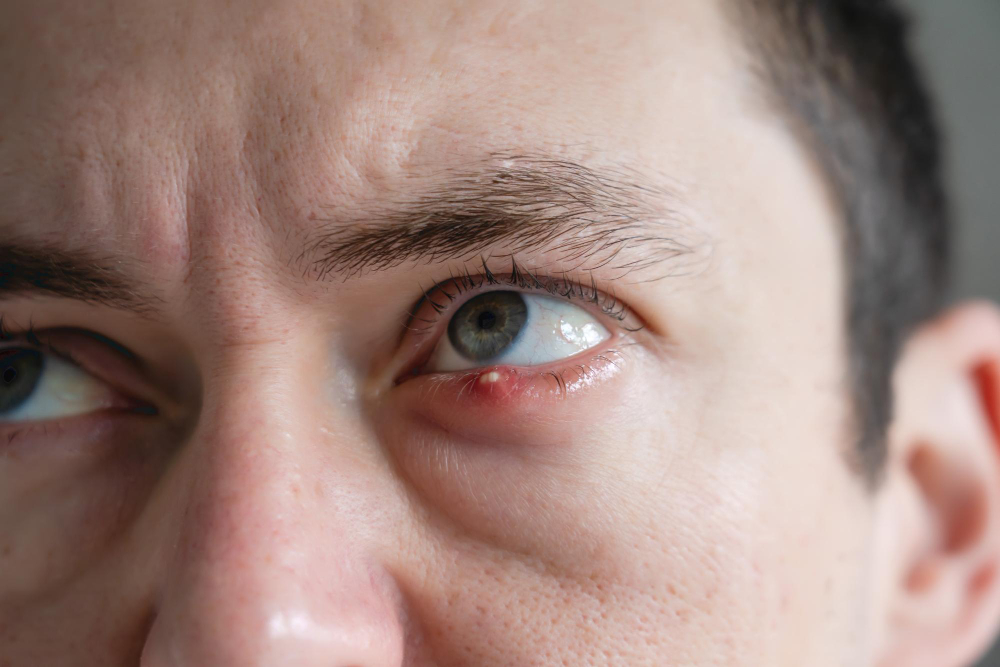
What Is a Chalazion?
A chalazion is a small, painless lump that forms on your eyelid. It happens when an oil gland gets blocked. Usually, a chalazion grows slowly. Most of the time, it does not hurt. However, it can cause mild swelling or redness. Sometimes, it may press on your eye and blur your vision. According to the American Academy of Ophthalmology, chalazia are not caused by infections. Instead, they result from clogged oil glands in the eyelid.
What Is a Stye?
A stye is a red, painful bump that appears on the edge of your eyelid. It often looks like a pimple. Unlike a chalazion, a stye is caused by a bacterial infection. Usually, it forms when bacteria infect an eyelash follicle or oil gland. As a result, the area becomes swollen, tender, and sometimes filled with pus. The Centers for Disease Control and Prevention (CDC) notes that styes are common and can affect anyone.
Key Differences Between Chalazion and Stye
Although both chalazion and stye cause eyelid lumps, they are different. Here are the main differences:
Because these differences matter, knowing “chalazion vs stye” helps you choose the right care.
Diagnosis Methods
Doctors can usually tell the difference between a chalazion and a stye by looking at your eyelid. Sometimes, they may ask about your symptoms. Rarely, further tests are needed. For example, if the lump does not go away or looks unusual, your doctor may suggest a biopsy. However, most cases are easy to diagnose during a simple eye exam.
Treatment Options for Chalazion
Most chalazia go away on their own. But you can help speed up healing with these steps:
In rare cases, a doctor may drain the chalazion or give a steroid injection.
Treatment Options for Stye
Styes often heal quickly with simple care. Try these tips:
Most styes get better within a week.
Prevention Tips
Although you cannot always prevent eye lumps, you can lower your risk. Here are some helpful tips:
By following these steps, you can help prevent both chalazion and stye.
When to See an Eye Specialist
Sometimes, eye lumps need medical care. You should see an eye specialist if:
Early treatment can prevent problems and protect your vision.
Consult an eye specialist for personalized advice if you notice any eye lumps or discomfort.