
Introduction
Pterygium is a common eye condition that affects many people, especially in sunny regions. This blog explains what pterygium is, its causes, symptoms, diagnosis, treatment options, and how to prevent it. If you are concerned about eye growth or discomfort, learning about pterygium can help you take the right steps for your eye health.
What is Pterygium?
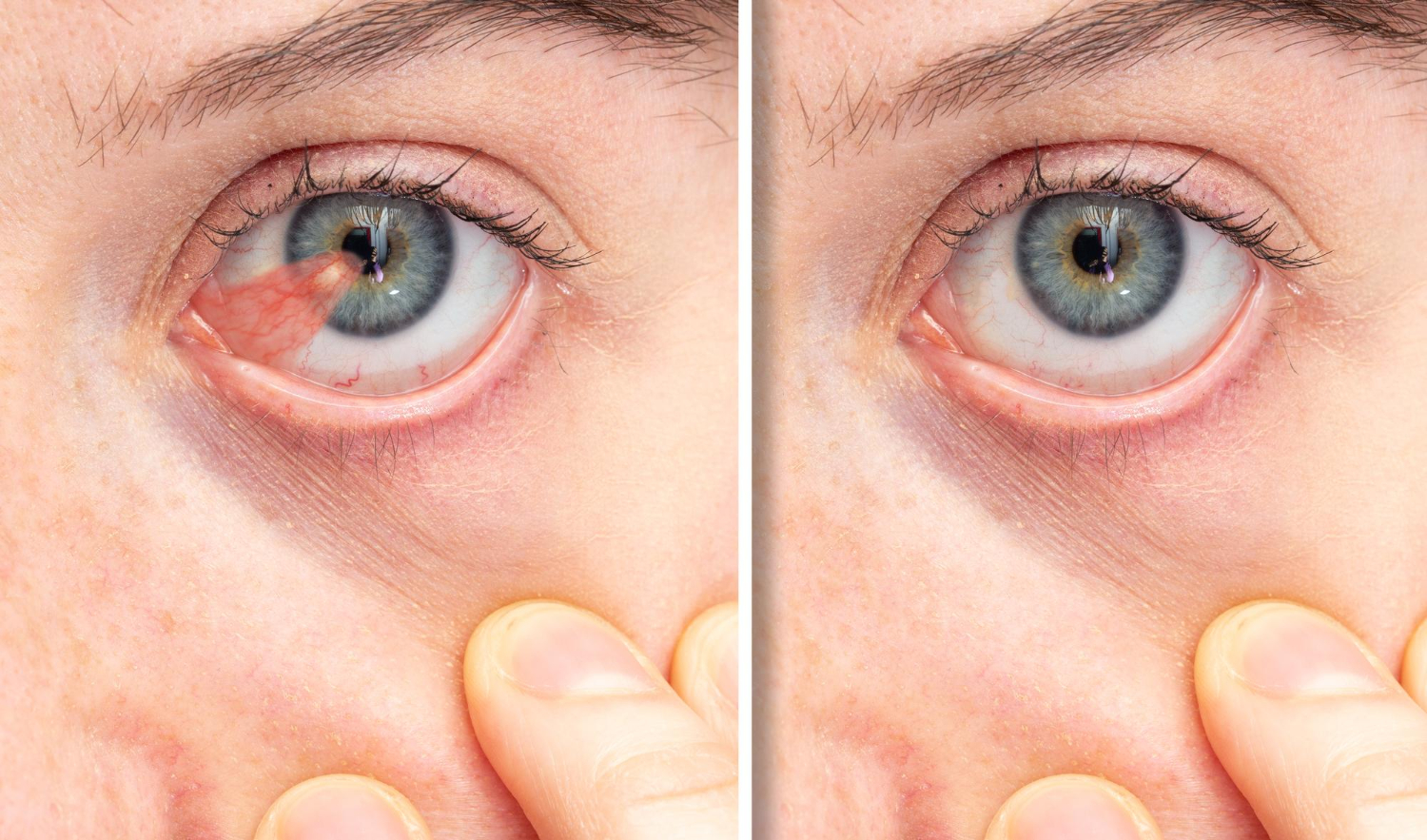
Pterygium is a non-cancerous growth on the clear surface of the eye, called the conjunctiva. Often, it starts on the side closest to the nose and can grow toward the center of the eye. Sometimes, people call it “surfer’s eye” because it is more common in those who spend a lot of time outdoors. Although it is usually harmless, it can cause discomfort or affect vision if it grows large.
Causes of Pterygium
Many factors can lead to pterygium. However, the main cause is long-term exposure to sunlight, especially ultraviolet (UV) rays. Other risk factors include:
Therefore, people in tropical or high-sun areas are at higher risk. According to the World Health Organization (WHO), protecting your eyes from UV rays is important for eye health.
Symptoms of Pterygium
Pterygium symptoms can vary. Some people may not notice any signs at first. However, common symptoms include:
Sometimes, the growth can become inflamed, causing more discomfort. If you notice these signs, it is wise to seek medical advice.
Diagnosis of Pterygium
Doctors can usually diagnose pterygium during a simple eye exam. During the visit, the eye specialist will:
In rare cases, further tests may be needed to rule out other eye problems. However, most cases are easy to identify.
Treatment Options for Pterygium
Treatment for pterygium depends on the size and symptoms. Many people do not need treatment if the growth is small and not causing problems. However, if you have discomfort or vision changes, options include:
After surgery, you may need eye drops to prevent the growth from returning. According to the American Academy of Ophthalmology, regular follow-up is important to monitor your eye health.
Prevention Tips for Pterygium
Although you cannot always prevent pterygium, you can lower your risk by following these tips:
By protecting your eyes, you can help prevent pterygium and other eye problems.
When to See an Eye Specialist
If you notice any unusual growth, redness, or discomfort in your eyes, it is important to see an eye specialist. Early diagnosis can help prevent complications. In addition, if you have vision changes or the growth is getting larger, do not wait to seek help. Regular eye check-ups are also helpful, especially if you live in a sunny area or work outdoors.
If you notice any unusual growth or discomfort in your eyes, consult an eye specialist for personalized advice.